
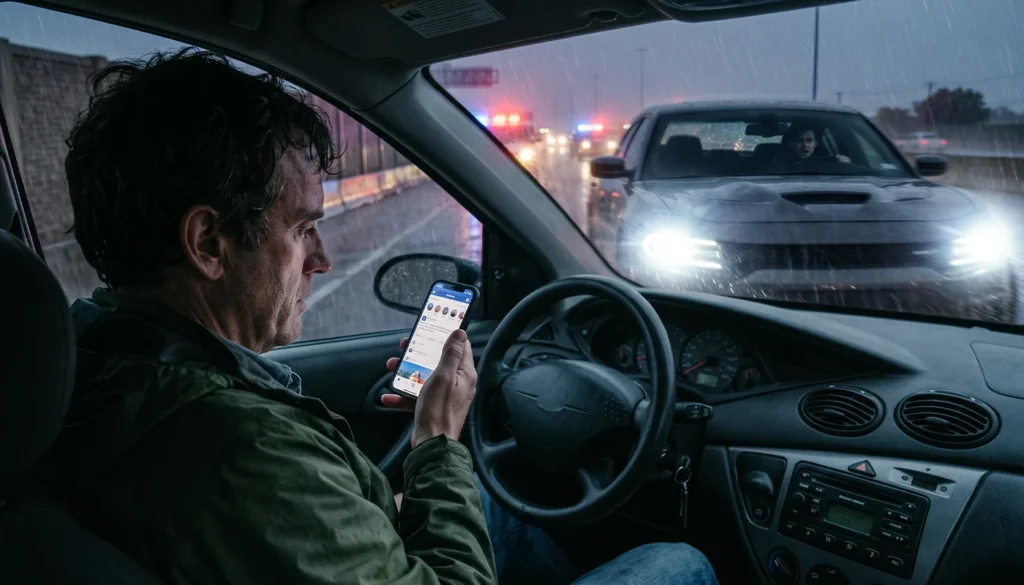
Distracted driving is dangerous because it takes a driver’s attention away from the road, reducing the ability to see hazards, react quickly, maintain control, and make safe decisions. Distractions can include texting, phone use, eating, grooming, adjusting vehicle controls, talking with passengers, or interacting with navigation systems.
In Texas, the consequences can be serious. The Texas Department of Transportation reported 86,384 distracted-driving crashes in 2025, resulting in more than 2,400 serious injuries and 299 deaths. For someone injured in a distracted driving accident in Houston, understanding what caused the crash can be important when pursuing insurance benefits or a personal injury claim. If you were injured and believe a driver’s phone use or another distraction contributed to the crash, car accident lawyer Houston can review the circumstances and available evidence.
Why Is Distracted Driving So Dangerous?
Distracted driving is dangerous because safe driving requires continuous attention to the roadway, traffic conditions, and vehicle operation. When a driver looks away, takes a hand off the wheel, or mentally focuses on something other than driving, the driver may miss a hazard or react too late to avoid a collision.
Distraction generally falls into three categories:
Visual Distraction
A visual distraction takes the driver’s eyes away from the roadway. Looking down at a text message, watching a video, searching for an item, or turning around to speak with a passenger can prevent a driver from seeing what is happening ahead. Even a brief glance can matter when vehicles are moving through Houston traffic, intersections, construction zones, or changing lanes.
Manual Distraction
A manual distraction occurs when a driver takes one or both hands away from the task of controlling the vehicle. Examples include holding a phone, eating, drinking, applying makeup, or reaching for an object. The driver may still be looking at the road but may not be able to steer or respond properly when an unexpected event occurs.
Cognitive Distraction
A cognitive distraction occurs when a driver’s attention is mentally focused somewhere other than driving. A driver can be looking forward while thinking about a conversation, work problem, navigation instructions, or another issue. This type of distraction can be difficult to prove after a collision, but it remains an important part of understanding why distracted driving is dangerous.
Also Read: Texas texting and driving laws
What Are the Most Common Causes of Distracted Driving?
The most common distractions include mobile phones, texting, passengers, food and drinks, navigation systems, vehicle controls, grooming, and other activities that compete for a driver’s attention. The National Highway Traffic Safety Administration recognizes distracted driving as an activity that diverts attention from driving and notes that distractions can be visual, manual, or cognitive.
In Houston, these distractions can become particularly concerning in congested traffic, at busy intersections, near work zones, and on major roads where drivers must respond quickly to surrounding vehicles.
Common examples include:
- Reading or sending text messages
- Checking social media
- Making or answering phone calls
- Adjusting GPS or navigation
- Eating or drinking
- Reaching for an object
- Changing music
- Talking with passengers
- Grooming
- Looking at a dashboard or infotainment screen
Is Distracted Driving Illegal in Texas?
Yes, certain forms of distracted driving are specifically prohibited by Texas law. Texas Transportation Code §545.4251 generally prohibits a driver from using a portable wireless communication device to read, write, or send an electronic message while operating a motor vehicle unless the vehicle is stopped. The statute includes specific exceptions and defenses.
Texas law does not mean that every form of distraction is automatically a criminal offense. However, a driver’s conduct can still be relevant to determining how a collision occurred and whether the driver may be legally responsible for resulting injuries.
How Can Distracted Driving Cause a Car Accident?
A distracted driver may cause a car accident by failing to recognize a hazard, reacting too slowly, drifting from a lane, following another vehicle too closely, or making an unsafe maneuver. The specific mechanism depends on the circumstances of the collision and the driver’s conduct.
Distracted driving may contribute to:
- Rear-end collisions
- Intersection crashes
- Lane-change accidents
- Sideswipe collisions
- Pedestrian accidents
- Bicycle crashes
- Motorcycle collisions
- Head-on collisions
- Multi-vehicle crashes
What Evidence Can Prove Distracted Driving?
Evidence of distracted driving may include phone records, witness statements, photographs, video footage, crash reports, vehicle data, admissions by the driver, and other information showing what the driver was doing before the collision. No single type of evidence is automatically required in every case.
Potential evidence may include:
- Police or crash reports
- Statements from eyewitnesses
- Dashcam or surveillance footage
- Photographs from the accident scene
- Cell phone records, when legally obtainable
- Social media or electronic evidence, when relevant and lawfully obtained
- Statements made by the driver
- Vehicle event data, when available
- Accident reconstruction evidence
- Medical records documenting the resulting injuries
The Texas Department of Transportation explains that it is the custodian of Texas crash records and that qualifying law enforcement crash reports are submitted to the department. A person directly involved in a qualifying crash may be entitled to obtain a copy of the report under Texas law. If the crash occurred in Houston, preserving evidence quickly can matter because surveillance footage may not be retained indefinitely. If you need help understanding how evidence may affect your claim, a motor vehicle accident attorney near me can review the available information and explain your potential options.
What Should You Do After a Distracted Driving Accident?
After a distracted driving accident, prioritize safety and medical care, report the collision, document the scene, and preserve information that may help establish how the crash occurred. Avoid confronting the other driver about suspected phone use or distraction. Let law enforcement and appropriate legal processes address disputed facts.
1. Get Medical Attention
Seek appropriate medical care after a collision, particularly if you have pain, dizziness, headaches, weakness, or other symptoms. Some injuries may not be immediately obvious.
2. Report the Crash
If the circumstances require police involvement, report the accident and provide accurate information about what you observed. Texas crash reports can later become important records when evaluating an insurance or injury claim.
3. Document the Scene
When safe, photograph vehicle damage, roadway conditions, traffic signs, debris, visible injuries, and the surrounding area.
4. Identify Witnesses
Obtain contact information from people who witnessed the collision. Their observations may help establish what occurred before impact.
5. Preserve Insurance Information
Notify your insurer as appropriate and keep copies of correspondence, claim information, medical bills, repair estimates, and other relevant documents. The Texas Department of Insurance recommends documenting accident information and keeping records associated with an insurance claim.
6. Avoid Speculating About Fault
Do not guess about what caused the collision or make statements that you cannot support. Describe what you personally observed and allow the available evidence to establish the facts.
Can You Recover Compensation After a Distracted Driving Accident?
An injured person may be able to seek compensation when another driver’s negligent conduct caused the accident and resulting injuries. Potential damages depend on the facts and may include medical expenses, lost income, property damage, physical pain, and other legally recognized losses. The existence of a traffic violation does not automatically determine civil liability. A claim generally requires evidence connecting the driver’s conduct to the accident and the claimant’s legally compensable injuries.
Texas Civil Practice and Remedies Code §16.003 generally provides a two-year limitations period for personal injury claims, although exceptions can apply. Insurance coverage also matters. The Texas Department of Insurance explains that auto policies may include liability, personal injury protection, medical payments, collision, and uninsured/underinsured motorist coverage, depending on the policy. For someone dealing with an insurer after a serious crash, A personal injury attorney near me may be a useful search when looking for local legal guidance.
Were You Injured in a Distracted Driving Accident? Act Now
Distracted driving can cause serious crashes, and important evidence may become harder to obtain as time passes. If you were injured in Houston, preserve your medical records, photographs, crash reports, witness information, and other evidence related to the collision. Avoid making statements to an insurer that could affect your claim before you understand your rights. If you believe another driver’s distraction caused your injuries, Abogada Kim Bruno can review the circumstances of your accident and explain your potential legal options. Call (713) 597-4270 to request a consultation or case review and take the next step toward protecting your claim.