
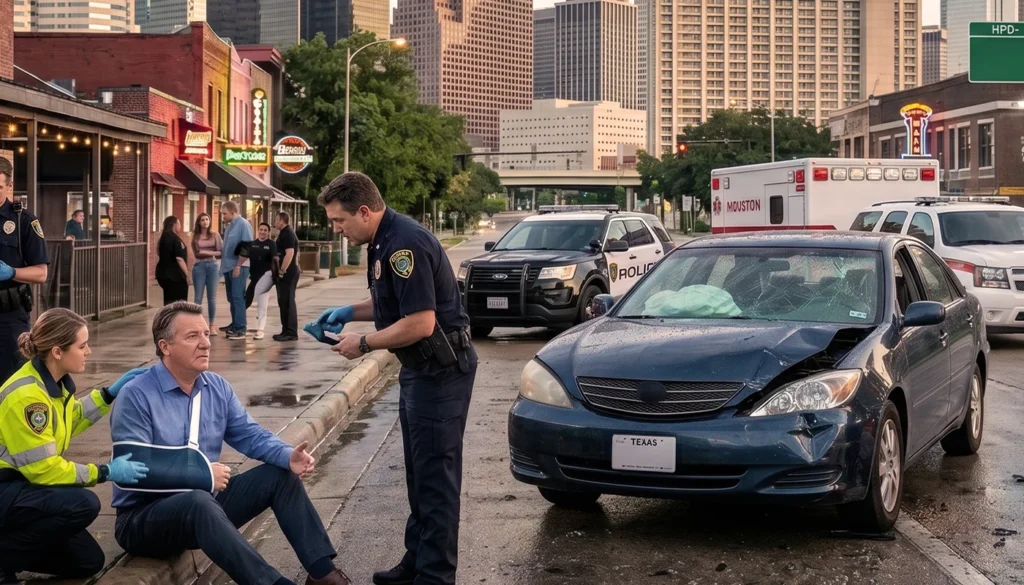
A hit-and-run accident occurs when a driver involved in a collision leaves without stopping and providing required information or assistance. In Texas, drivers involved in a crash causing injury, death, or certain property damage generally have duties to stop, remain at the scene, provide information, and render reasonable assistance. If the driver cannot be identified, an injured person may still have insurance options, including uninsured/underinsured motorist coverage, depending on the policy and facts.
If you were injured in a Houston hit-and-run, the steps you take afterward can affect your ability to document the crash and pursue available insurance benefits. Reporting the collision, seeking prompt medical attention, preserving evidence, and notifying your insurer can all be important. A hit and run accident lawyer Houston can review the circumstances of the crash and help you understand what legal and insurance options may be available.
What Is a Hit-and-Run Accident Under Texas Law?
A hit-and-run accident is a collision in which a driver fails to meet the legal duties that apply after the crash. Texas Transportation Code Chapter 550 requires a driver involved in a collision resulting in injury or death to stop, determine whether anyone needs aid, remain at the scene, and provide information and assistance. For a collision involving only vehicle damage, separate duties apply.
Texas Transportation Code §550.021 addresses collisions involving personal injury or death. If a driver leaves a crash that resulted in death or serious bodily injury, the offense can be a felony. Less serious injury can also carry criminal penalties. These criminal classifications concern the driver’s conduct; they do not automatically determine whether an injured person can recover civil damages.
What Happens After a Hit-and-Run Accident?
After a hit-and-run accident, law enforcement may investigate the collision while the injured person addresses medical treatment and insurance issues. If the vehicle or driver is identified, the circumstances can change because the victim may be able to pursue a claim against the at-fault driver’s liability insurance. If the driver remains unidentified, the victim may need to rely on available first-party insurance coverage.
Texas law requires an operator involved in a qualifying collision to give identifying information and provide reasonable assistance to an injured person. Texas Transportation Code §550.023 specifically addresses those duties.
A police report can also become an important record of the incident. The Houston Police Department’s accident-report information explains that accident reports prepared by Houston officers are filed with the Texas Department of Transportation and provides procedures for obtaining them.
What Should You Do Immediately After a Hit-and-Run?
Your first priority should be safety and medical care. If you or someone else is injured, call 911 and do not chase the fleeing driver. Trying to follow a suspect can create another collision or put you in danger. If you need help understanding your legal and insurance options after the crash, a car accident lawyer near me can review the circumstances and explain what steps may be appropriate.
- Call law enforcement. Report the crash and tell the responding officer that the other driver left the scene. Texas Department of Insurance guidance states that uninsured motorist coverage may not pay for a hit-and-run if the accident was not reported to police.
- Get medical attention. Some injuries may not be obvious immediately. Follow appropriate medical advice and keep records of treatment.
- Record what you remember. Write down the time, location, direction of travel, vehicle make, model, color, license plate information, damage, and driver description while the details are fresh.
- Look for witnesses and cameras. Ask witnesses for contact information. Note nearby businesses, residences, traffic cameras, parking facilities, or other locations that may have relevant footage.
- Photograph the scene. Take pictures of your vehicle, injuries, roadway conditions, debris, skid marks, and surrounding area when it is safe to do so.
- Notify your insurer. Report the collision promptly and review your policy for uninsured/underinsured motorist, personal injury protection, medical payments, collision, and other potentially applicable coverage.
- Preserve documents. Keep the police report, medical records, bills, wage-loss documentation, insurance correspondence, photographs, and repair estimates.
Also Read: what to do after a hit-and-run accident
How Does Insurance Work After a Hit-and-Run Accident?
Insurance may become more complicated because there is no identified at-fault driver whose liability insurer can immediately be contacted. Your own policy may provide the most important source of recovery.
Uninsured/Underinsured Motorist Coverage
UM/UIM coverage is designed to protect an insured when the responsible motorist has no insurance, insufficient insurance, or, in qualifying circumstances, cannot be identified after a hit-and-run. Texas Department of Insurance guidance specifically identifies hit-and-run crashes as a situation in which UM/UIM coverage may apply.
Personal Injury Protection and Medical Payments Coverage
Depending on your policy, PIP or medical payments coverage may help pay certain medical expenses. Texas auto policies include PIP unless the insured rejects it in writing. These coverages operate differently from UM/UIM coverage, so having one does not necessarily mean you have the same benefits as another.
Collision Coverage
Collision coverage can help pay to repair or replace your vehicle after a covered collision, subject to the policy deductible and terms. It does not substitute for bodily-injury coverage.
Can You Still Get Compensation If the Hit-and-Run Driver Is Not Found?
Yes, you may still have an insurance claim even if the hit-and-run driver is never identified. In Texas, uninsured/underinsured motorist coverage can apply when an unidentified hit-and-run driver causes an accident, subject to the policy and applicable requirements.
The Texas Department of Insurance explains uninsured/underinsured motorist coverage and states that UM/UIM coverage can pay for injuries and property damage caused by a hit-and-run driver. It may cover medical bills, pain and suffering, and certain property losses, depending on the coverage. Texas insurers must offer UM/UIM coverage, although a policyholder can reject it in writing. The exact coverage available depends on the policy. A policy may also contain reporting, cooperation, proof, or other requirements. That is why an injured person should review the actual policy rather than assume that every hit-and-run is covered.
Also Read: hit by an uninsured driver in Texas
What Compensation Can You Seek After a Hit-and-Run Injury?
If you can establish a legally compensable injury claim, potential damages may include economic and noneconomic losses. The available damages depend on the facts, applicable law, insurance coverage, and evidence.
Potential losses can include:
- Emergency and other medical expenses
- Future medical treatment when supported by evidence
- Lost wages and certain losses of earning capacity
- Physical pain and suffering
- Mental anguish
- Physical impairment or disfigurement
- Property damage where applicable
When Should You Talk to a Houston Car Accident Lawyer?
Consider legal guidance if you suffered significant injuries, the insurance company disputes your claim, your medical treatment is ongoing, the driver has not been identified, or you are unsure whether your policy provides UM/UIM coverage. A Houston personal injury attorney can review the crash evidence, insurance policy, medical records, and potential sources of compensation. Legal guidance can also be useful if the other driver is later identified and questions arise about liability, comparative responsibility, or the value of the claim.
You can contact Abogada Kim Bruno at (713) 597-4270 if you want to discuss the circumstances of a Houston hit-and-run accident and understand your potential legal options.
How Long Do You Have to File a Hit-and-Run Injury Claim in Texas?
Texas generally gives a person two years to bring a personal injury lawsuit, measured from when the cause of action accrues. Texas Civil Practice and Remedies Code §16.003 contains the general two-year limitations period for personal injury claims. Different rules or exceptions can apply depending on the claim and circumstances. Insurance claims can also have policy-specific notice or contractual requirements that are separate from the statute of limitations. Do not assume that having two years to file a lawsuit means you can wait two years before notifying an insurer or preserving evidence.
Don’t Wait After a Hit-and-Run
A hit-and-run accident can leave you dealing with injuries, medical bills, vehicle damage, and an uncertain insurance process. Taking action early can help protect important evidence and give you a clearer understanding of your options. If you were injured in Houston and the driver fled, report the crash, seek medical attention, preserve available evidence, and review your insurance coverage as soon as possible.
You do not have to navigate the process alone. Abogada Kim Bruno can review the circumstances of your hit-and-run, explain your potential legal and insurance options, and help you understand what steps may be appropriate for your situation.