
Driving in Houston, Texas, comes with unique challenges: busy intersections, highways, and roundabouts. One of the most important traffic rules for safety is understanding what it means to yield. Proper yielding not only prevents accidents, protects pedestrians and cyclists, and ensures smooth traffic flow, but it can also help you avoid legal complications.
Even with careful driving, accidents can happen. Knowing the rules of yielding can protect your rights and, if a collision occurs, consulting a Houston car accident lawyer can help you understand liability and pursue proper compensation.
Yield Sign Meaning
A yield sign tells drivers to slow down and give the right of way to other vehicles or pedestrians. Unlike a stop sign, you only stop if necessary, for example, if another car or pedestrian has priority. In Houston, you’ll commonly see yield signs on:
- Highway on-ramps like I-45, US-59, or Loop 610.
- Roundabouts in areas like The Woodlands and Sugar Land.
- Neighborhood streets such as Bellaire and West University Place.
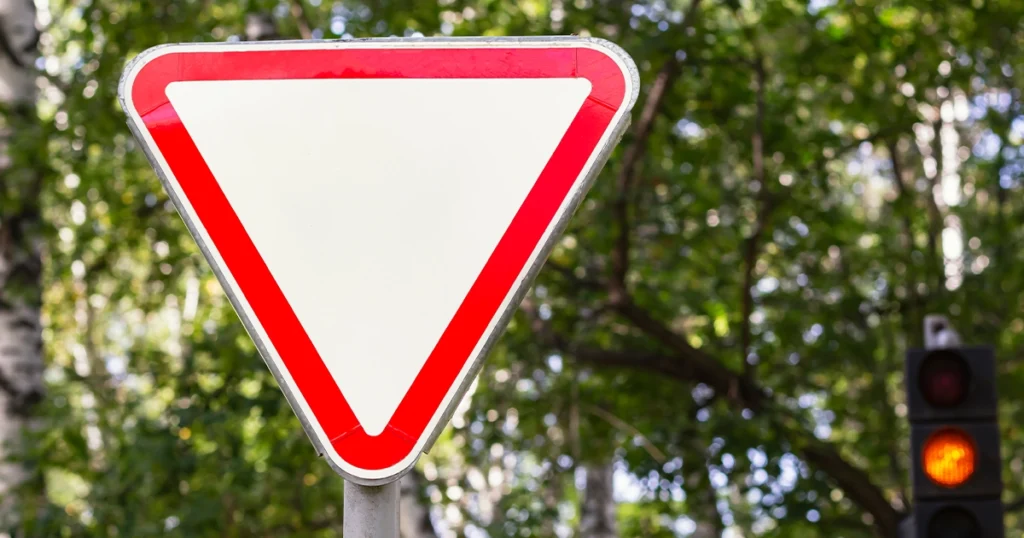
Yield signs are inverted triangles with a red border, white background, and the word “YIELD,” making them easy to recognize.
Under Texas Transportation Code § 545.153, drivers approaching a yield sign must slow to a reasonable speed and yield the right of way to any vehicle or pedestrian that poses a hazard. Failing to yield is prima facie evidence of a violation if a collision occurs.
Yield Lines in Houston
Alongside yield signs, yield lines, and white triangles painted on the road show exactly where to slow down or stop. In Houston, yield lines are often found:
- At roundabouts: marking where cars must yield to circulating traffic
- In school zones: guiding drivers to stop for students
- Near busy pedestrian areas: e.g., The Galleria or Rice University
Yield lines improve safety by clearly indicating where vehicles must yield, helping avoid collisions.
Common Situations That Require Yielding
Understanding when to yield is essential for safe driving in Houston. Common scenarios include:
- Intersections
- Yield to vehicles already in the intersection or those with the right-of-way.
- At uncontrolled intersections, the driver on the left yields to the driver on the right.
- Stop at the stop line or crosswalk if present; otherwise, stop where you can safely see oncoming traffic.
Texas Law Reference: Texas Transportation Code § 545.151, which sets rules for yielding at intersections and gives priority to vehicles on the main road or approaching closely enough to be a hazard.
- Yield to vehicles already in the intersection or those with the right-of-way.
- Pedestrian Crossings
- Pedestrians always have the right-of-way at crosswalks or intersections.
- Failing to yield can result in fines, liability, or increased insurance costs.
Texas Law Reference: § 545.156 requires drivers to yield to pedestrians in crosswalks.
- Pedestrians always have the right-of-way at crosswalks or intersections.
- Roundabouts
- Yield to traffic already in the circle.
- Stop at the yield line if necessary, and enter only when it’s safe.
- Proper yielding keeps roundabouts flowing smoothly and prevents collisions.
- Yield to traffic already in the circle.
- Merging Lanes
- When entering a highway or merging into traffic, yield to vehicles already traveling in the lane.
- Signs and pavement markings indicate which lane must yield.
Texas Law Reference: § 545.154–§ 545.155 govern merging rules, requiring drivers entering highways from ramps or driveways to yield to traffic already on the highway.
- When entering a highway or merging into traffic, yield to vehicles already traveling in the lane.
- Turning Left
- Drivers turning left must yield to oncoming traffic that poses a hazard.
Texas Law Reference: § 545.152 covers left-turn yielding obligations.
- Drivers turning left must yield to oncoming traffic that poses a hazard.
How to Yield Safely in Houston
Yielding safely requires focus, judgment, and awareness of your surroundings. Houston drivers can reduce accidents and protect others by following right-of-way rules and paying close attention to traffic, pedestrians, and cyclists before proceeding. Tips for safe yielding in Houston:
- Slow Down Early: Approach the yield sign at a reduced speed to assess the situation.
- Check Traffic: Look in all directions; vehicles already on the road have the right-of-way.
- Watch for Pedestrians and Cyclists: Be especially alert near school zones, downtown intersections, and Memorial Park.
- Proceed When Safe: Only move forward if the road is clear; never force your way into traffic.
- Make Eye Contact: If unsure, make eye contact with other drivers or pedestrians.
- Use Turn Signals: Clearly indicate your intentions when merging or turning.
Yield vs Stop Sign
Confusing the two can cause accidents, especially on busy Houston streets and highway on-ramps. Many drivers confuse yield signs with stop signs:
- Stop Sign: You must come to a complete stop at the line, even if the road is clear.
- Yield Sign: Slow down and proceed only when safe; stop only if necessary.
Consequences of Failing to Yield in Texas
Failing to yield can have serious safety and legal consequences:
- Accidents: A leading cause of crashes at intersections, crosswalks, and merging lanes.
- Traffic Citations: Texas law (§ 545.153 and § 545.151) allows officers to issue fines for failure to yield.
- Insurance Impacts: Points on your license can increase insurance rates.
- Liability for Damages: Drivers at fault may be responsible for medical bills, lost wages, and property damage.
- Legal Penalties: Under § 542.4045, failing to yield and causing injury can result in fines ranging from $500–$2,000, or $1,000–$4,000 for serious bodily injury.
Houston-Specific Scenarios
Understanding how to yield safely in real-world Houston situations can help prevent accidents and protect everyone on the road. Drivers should pay attention to traffic patterns, pedestrian activity, and local road rules to make informed decisions at intersections, merges, and roundabouts. Examples of safe yielding in Houston:
- Merging onto I-45 North: Yield to vehicles already traveling in your lane, especially during rush hour.
- Downtown intersections: Yield to cars on the main road and pedestrians crossing at crosswalks.
- Roundabouts in The Woodlands: Yield to vehicles inside the circle and follow pavement markings.
- Pedestrian-heavy zones: Slow down or stop near The Galleria, Rice University, or Memorial Park to protect pedestrians and cyclists.
Tips for Safe Yielding in Houston
Practicing safe yielding helps reduce accidents, protects pedestrians and cyclists, and keeps Houston traffic moving smoothly. By staying alert and following right-of-way rules, drivers can make safer decisions at intersections, merges, and roundabouts. To yield safely in Houston:
- Approach intersections slowly and scan carefully for traffic and pedestrians.
- Yield to all vehicles and pedestrians with the right-of-way.
- Follow pavement markings, yield signs, and yield lines.
- Be patient at busy intersections and roundabouts.
- Use turn signals to clearly communicate your intentions.
Stay Safe and Protect Your Rights
Yielding is more than a traffic rule; it’s a responsibility that protects everyone on Houston roads. Following Texas yield laws helps prevent collisions and safeguard pedestrians and cyclists. If you’re injured in a failure-to-yield accident, Abogada Kim Bruno can help you understand your rights and pursue compensation. Slow down, stay alert, and yield when required; your actions can prevent serious consequences.