
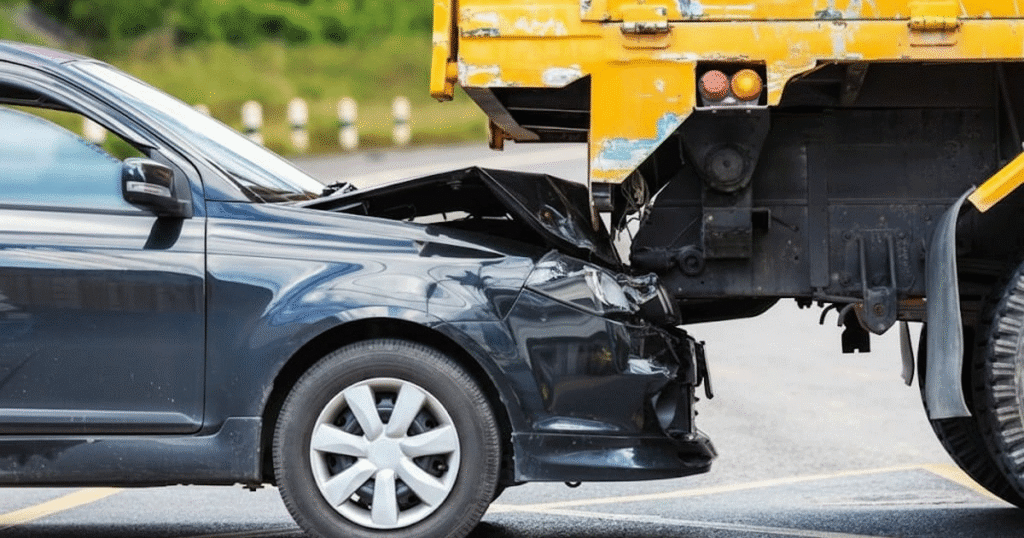
Trucking accidents are some of the most catastrophic events on U.S. highways. Because semi-trucks can weigh up to 80,000 pounds when fully loaded, they have the potential to cause significantly more destruction than a typical car crash. Even minor mistakes, such as misjudging a turn or braking too late, can lead to chain-reaction collisions that leave victims with life-changing injuries. These accidents often involve multiple vehicles, high repair costs, complex insurance claims, and lengthy legal battles where the help of an experienced truck accident lawyer can make all the difference.
For motorists and truck drivers alike, it’s crucial to understand the different types of truck accidents that happen most often. Below, we’ll explore seven major types of truck accidents, why they occur, and the dangers they pose.
1. Jackknife Accidents
A jackknife accident occurs when the truck’s trailer swings outward, creating a sharp angle with the cab that resembles a folding pocketknife. This typically happens when the driver brakes too hard or too suddenly, especially on slick surfaces like rain, ice, or snow. Loss of traction is a major contributing factor. Once the trailer swings out, it becomes nearly impossible for the driver to regain control.
These accidents are particularly dangerous because the trailer can sweep across multiple lanes of traffic, striking several cars in a matter of seconds. On busy highways, jackknifes often result in multi-vehicle pileups that can shut down traffic for hours. Victims in smaller vehicles face a high risk of severe injuries due to the force of impact. Jackknife accidents also frequently involve hazardous cargo, such as flammable materials, which makes the consequences even more deadly.
2. Rollover Accidents
Rollover accidents happen when a truck tips onto its side or flips over entirely. These crashes are commonly caused by speeding around curves, improperly loaded cargo, or sudden evasive maneuvers. Trucks with high centers of gravity are particularly prone to rollovers, especially when their cargo shifts unexpectedly. Driver fatigue and distraction are also leading causes of these accidents.
When a truck rolls over, it often blocks multiple lanes of traffic, creating massive roadway hazards. Smaller cars can get trapped underneath or pinned against guardrails, leading to catastrophic injuries or fatalities. In some cases, rollover accidents involve hazardous chemicals spilling onto the road, requiring specialized clean-up crews and emergency evacuations. Because of their destructive potential, rollover accidents are among the most feared on highways.
3. Rear-End Collisions
Rear-end collisions involving trucks occur when the truck crashes into the back of another vehicle or when a car collides with the rear of the truck. Due to their enormous size and weight, trucks need much longer stopping distances compared to passenger cars. If a truck driver is distracted, fatigued, speeding, or following too closely, they may not be able to stop in time to avoid a collision.
The impact of a truck rear-ending a passenger vehicle is often catastrophic. Victims may suffer spinal injuries, traumatic brain injuries, or fatalities because of the massive force involved. On the other hand, when a smaller car rear-ends a truck, it can slide underneath the trailer, resulting in an underride accident that is often fatal. These crashes highlight the importance of proper braking systems, attentive driving, and maintaining safe following distances.
4. Underride Accidents
An underride accident is one of the deadliest forms of trucking accidents. This occurs when a smaller vehicle slides beneath the trailer of a truck, either from the rear or the side. Because the bottom of the trailer is much higher than a passenger car’s hood, the roof of the car can be sheared off upon impact. These crashes usually result in fatalities or catastrophic injuries.
Underride accidents typically happen when a truck makes a sudden stop, when drivers fail to see the trailer at night, or when trucks lack proper underride guards. Although federal safety standards require many trucks to have guards, they are not always strong enough to prevent a car from sliding underneath. These accidents often make headlines due to their devastating nature and the calls for stricter safety regulations.
5. Blind Spot Accidents
Every truck has large blind spots, often referred to as “no-zones,” located along both sides, directly in front, and behind the trailer. Passenger car drivers who linger in these areas are invisible to truckers, which makes lane changes and wide turns extremely dangerous. Blind spot accidents occur when trucks merge or turn into cars that they simply cannot see.
These accidents are especially common in heavy traffic and urban environments, where vehicles frequently move in and out of a truck’s blind zones. The consequences can range from sideswipe collisions to vehicles being forced off the road entirely. Motorcyclists and smaller cars are at even greater risk because they can easily go unnoticed. While truck drivers must be cautious, motorists should also avoid staying in blind spots for extended periods.
6. Tire Blowouts
A tire blowout is a sudden burst of one of a truck’s massive tires, often causing the driver to lose immediate control. Blowouts can occur due to poor maintenance, worn-out tires, overloading, or extreme road conditions. When a blowout happens, pieces of rubber can scatter across the highway, creating dangerous obstacles for other drivers.
The most immediate danger of a blowout is that it can cause the truck to swerve violently or roll over. In some cases, a blowout can lead to jackknife accidents if the driver struggles to regain control. Even if the truck remains upright, other vehicles may collide with tire debris or crash while swerving to avoid it. Because trucks travel thousands of miles every week, regular tire inspections are critical to preventing these potentially deadly accidents.
7. Wide Turn Accidents
Wide turn accidents, also called “squeeze-play” crashes, occur when a truck swings left before making a right-hand turn. Trucks need extra space to navigate turns, but this maneuver often traps vehicles between the truck and the curb or another obstacle. Smaller cars caught in this position can be sideswiped, crushed, or forced off the road.
These accidents are common in cities and intersections where space is limited. Pedestrians, cyclists, and motorcyclists are especially vulnerable because they are less visible to truck drivers during a wide turn. Wide turn crashes not only cause severe injuries but also highlight the dangers of underestimating a truck’s turning radius. Motorists are advised never to position themselves alongside a truck that is preparing to turn.
Why Hiring a Trucking Accident Lawyer is Essential
Unlike typical car accidents, trucking accidents involve multiple parties and federal regulations, making them significantly more complex. Trucking companies, cargo loaders, maintenance providers, and even truck manufacturers may all share liability. Insurance companies for these corporations often fight aggressively to minimize payouts, leaving victims at a disadvantage.
A skilled trucking accident lawyer will:
- Conduct a detailed investigation into the cause of the crash.
- Use accident reconstruction experts to establish liability.
- Collect black box data, driver logs, and maintenance records.
- Negotiate with powerful insurance companies on your behalf.
- Fight for maximum compensation, including medical expenses, lost wages, pain and suffering, and long-term care.
Trucking Accident Law | Abogada Kim Bruno
At Abogada Kim Bruno, we understand the devastating toll truck accidents take on victims and their families. Our dedicated legal team provides expert representation to ensure that you get the justice and compensation you deserve.
Whether you were injured in a jackknife accident, a rollover, or an underride crash, Abogada Kim Bruno will fight aggressively for your rights against trucking companies and insurers.
Contact us today for a free consultation. Don’t face this battle alone.